Saturday, February 19, 2011

Santa Barbara

The wind howled. We got out our parkas to wear...in California! Who would have thought it?

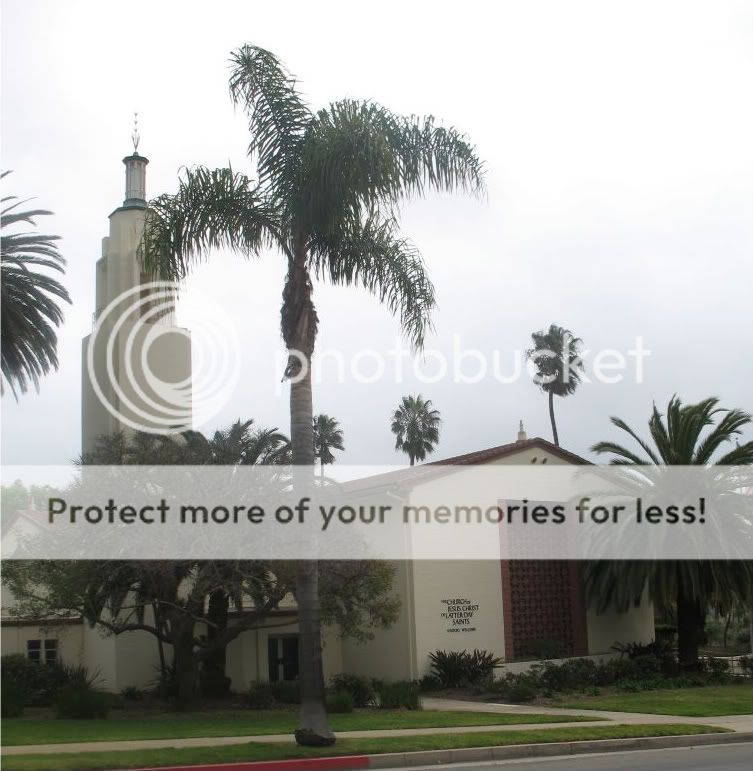
As we drove down the coast recently we decided to stop in at Santa Barbara. We were actually looking for the old Santa Barbara mission. Ahead I saw a large yellow stucco building that I thought might be the right one, but we were a block too soon, so instead of the old mission church, we got this:


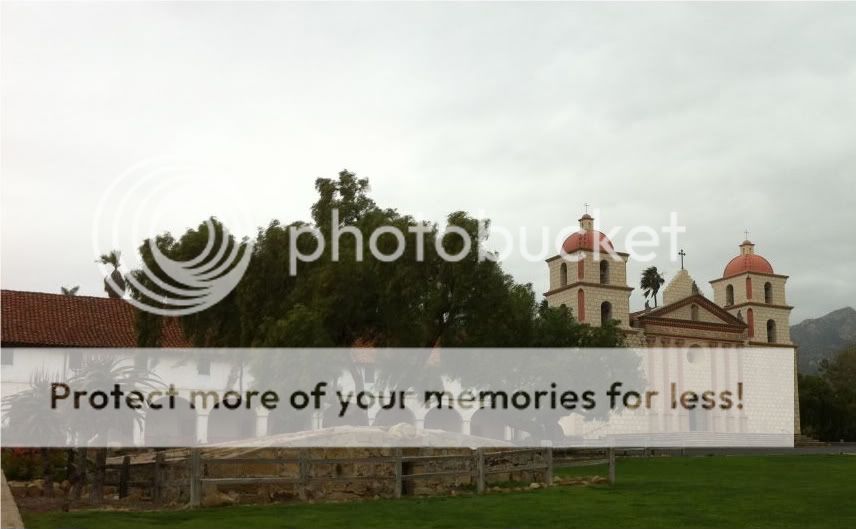
A block later we came upon our intended destination:


Some of the plants that grow in southern California are so different than what we are accustomed to, so I just had to take pictures of them. Most of these were either in the courtyard area of the mission or in the cemetery just outside the doors of the church.


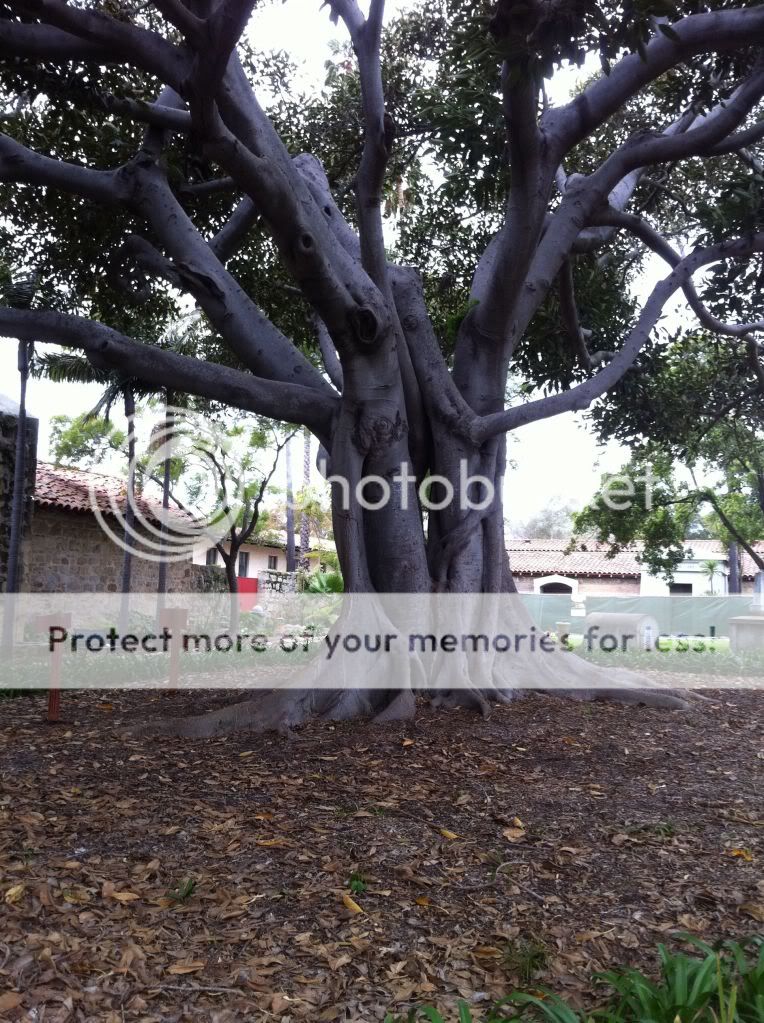
This is an interesting old fig tree that originally came from Australia.


The interior of the church was beautiful, though rather drafty!


There was an interesting video about the founding of the mission and some of its history. There was also a museum area with some artifacts. The ones I found most interesting were these two.

This is a wool carder made out of teasel plants.


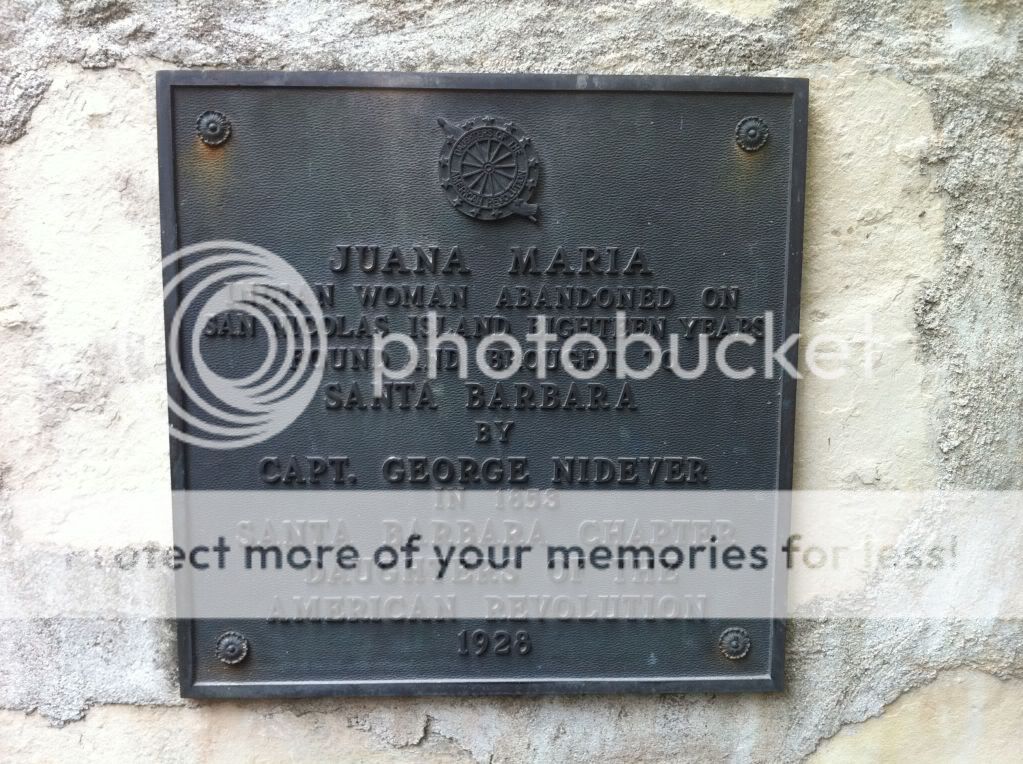
If you remember the story 'Island of the Blue Dolphins', it is the story of a girl who is left alone on an island off the California coast for 18 years before she is rescued. In real life, her name was Juana Maria. She was buried in the cemetery at the Santa Barbara mission.


It is interesting...after living so long in Alaska, the two places I remember feeling the most cold were standing on the dock in the summer in San Francisco, and walking around outside the mission of Santa Barbara in southern California.

Alaska Beach, California Beach

Quite a few years ago, when I was subbing at an elementary school in Alaska, they had 'Beach Day' where all the students and teachers were invited to wear beach attire to school. When the day arrived, students arrived clad in shorts, flip-flops and other such beach clothing. They were surprised when one of the teachers showed up in a long sleeved shirt, rain gear and waders up to her armpits. She explained that she was dressed for an Alaskan beach.

Recently we drove partway up the California coast on a beautiful sunny day. The sky and ocean were blue. The ocean was still. We even saw some surfers practicing. Definitely a California beach.


The very next day, it looked more like an Alaskan beach with gray skies, rain, gray ocean, whistling wind, etc. Even though it was in the 50s, I had to get my winter parka out and wear it. When we went past the surfing area the 2nd day, the intrepid surfers were still there wearing wet suits to keep warm.

Thursday, February 17, 2011

Solvang

For a day of fun and relaxing on our recent vacation, we decided to stop in at the little town of Solvang. Solvang was settled by Danish folks and is celebrating its 100th birthday this year. At some point the townsfolk decided to insist that every building in the main part of town should look like their idea of old Denmark.

This one has a thatched roof.


The windmill has a glass shop in the bottom.


The local museum is fitted out like an old Danish home. You can even see the aebleskivers on the old stove there.


All the kitchen cupboards were painted with pictures of flowers.


We ate smorgasbord at the Red Viking.


In a museum about Hans Christian Andersen they had this information about making wooden shoes as well as specialized tools for making them which of course was important to the woodworker.


A most relaxing day!

Wednesday, February 16, 2011

From mid-winter to early Spring

On a recent trip, we almost felt like we were traveling through time as we went from Winter to early Spring, all in one day and within less than 100 miles. We awoke to freezing temperatures and snow along the roadside. Within an hour of driving, the vegetation changed as well as the temperature. Although many trees were without their leaves, clearly we were in a different climate area....one where palm trees seem to thrive. While at home, people are still concerned with shoveling snow, here in this place, they were busy trimming shrubbery and fertilizing lawns! The building in the picture is very white, but underneath that surface is a foundation of some sort of lava rock and the upper areas made of sandstone, all covered with stucco and then painted.


It is apparently a place where even cotton grows!


Though the trees were bare of leaves at that time, we were amazed at the varieties of trees...pomegranates, figs, and pecans. We enjoyed looking at some of the woodwork. We noticed especially one chair for which the legs had been hand turned. They were not quite the same size and the whole thing was just slightly off-center. It is nice to know that woodwrights have these problems with misbehaving wood no matter what the century.


Spinning and weaving rugs were some of the old skills we learned more about.


As you see with the vegetation, this place is a desert...and yet we were shown a photo of this stone house, which sits up a little hill from the road, with water lapping at the entrance to the driveway! The day we saw it, we could hardly see any water in the river at all.


Just down the road from this house, a man was out working in his garden, where the plants seemed to be up and about 4 inches tall. Amazing!

Saturday, February 12, 2011

Woodwright Shop Potluck

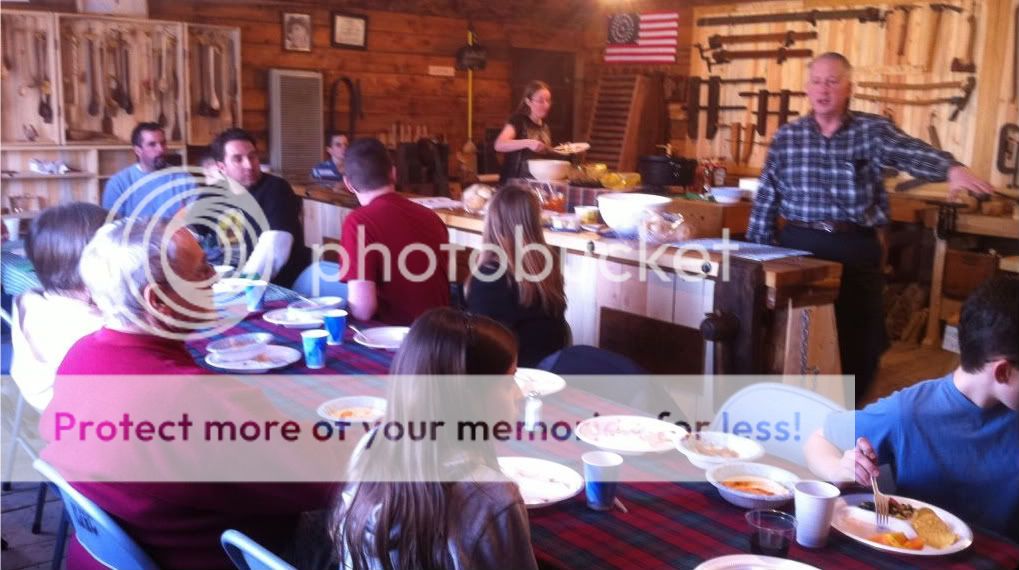
The renovations to the woodwright shop are complete, and not any too soon! The annual Baby Animal Day celebration is right around the corner. Today almost all our woodwrights gathered to become acquainted with the 'new' shop and prepare for the coming season. Of course, any decent gathering includes food, right?


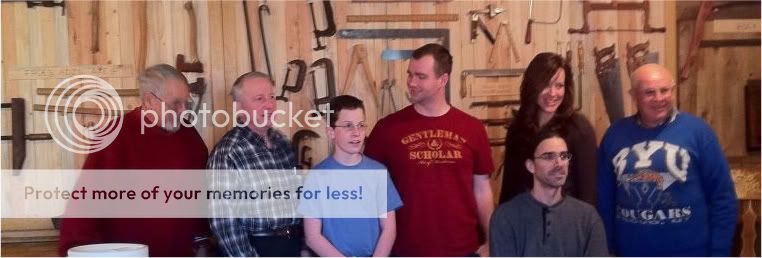
Next time the woodwrights gather, they will all look like they just stepped out of the 1880s.


If you are around northern Utah, be sure to stop in and visit. Baby Animal Days will be April 7-9. We'd love to see you there!

Friday, February 11, 2011

We're rich!

Well...we are NOT rich in the normal sense of the word I guess, but money isn't everything.

Over the years, I've gotten a variety of messages from my children, telling me of riches to come...by phone, by mail, by email and in person.

One came in the form of a birthday card, explaining that my birthday present was not finished yet but that I would get it in September. I was too dense. I didn't get it. Sure enough, come that September a new little granddaughter arrived. Her mother told me that I was so dense that next time she'd throw a brick at me! Since then, I've received several bricks in the mail...each one good for announcing a new grandchild.


Once it came as a scrapbook page...


Most recently I went in to spend some time with my morning exercise routine......that is Mii on the left there. Next to me is woodworker. On the right is a guest Mii. Then the little Mii sitting on the floor suddenly appeared, with the label 'Baby H'! I don't know how they got it there...but clearly they managed to do it without my knowing it. A happy surprise!


By the end of summer, we should have 14 grandchildren. We are truly rich. For a related post, see this

Monday, February 7, 2011

College - World War II

This post is taken from notes made by my father who was a university student during the beginning of World War II. I include it because it was interesting to see how the war made such an impact on his university as they went from a normal sized group of students, to very few students when so many were drafted and went to war, and then a huge amount of students when everyone returned and had access to the GI Bill. He was a chemistry major, so his comments are pretty specific to what happened in his department.

He says:

Perhaps the effects of World War II in the chemistry department might be of interest. I began my time at USAC (Utah State Agricultural College) in September of 1941. Things had not changed much then except that Dr. Reuben Hill, the department head, had been called to the service before the US got into the war.

I took inorganic chemistry, taught by Dr. Sherwin Maeser. The class was always taught at 8 AM. The old lecture room had seats for 120 students but there were about 150 in the room the first day of class. Dr. Maeser came in at 8 AM and saw about 25 students standing in the back of the room. He looked up and said, "There will be plenty of seats next week." -- and there were. I think there were less than 50 left in the class by the end of the school year, maybe partially a result of Pearl Harbor being attacked on December 7th.

Things really changed in 1942. Several teachers were no longer there. Two of my high school teachers were there along with Professor Neuhoff, a refugee from Poland, who was teaching general chemistry. (The next year he moved on to the University of Utah for more pay and later it was learned he had never been to college.) The analytical chemistry teacher, Professor Hurst, was still there since he was nearly old enough to retire.

We were told to expect to be drafted soon unless we joined the reserve, in which case we could go on to school. Most everyone joined by November 1942. We had physical exams in December by either the Navy or Army. (The Air Corps was part of the army still.) Those who joined the reserves were sent to the service about February of 1943 and a group of servicemen took over the only ladies' dorm for the Spring quarter. I don't think any of them took chemistry, so the classes became quite small and almost completely female.

Those who joined the reserve all went to Fort Ord and became operators of heavy guns. I had signed up for the Navy but didn't pass the physical exam and somehow they transferred me to the Army. This resulted in my missing the big call-ups until July, and then I went to the infantry in Texas.

For about the next two years I went to different Army schools and finally spent some time in Guam in the Signal Corps. I was discharged in time for the Spring quarter in 1946. I returned to Logan and visited the chemistry department. By then, Dr. Hill was back. Dr. Maeser was still teaching inorganic chemistry and physical chemistry. Professor Hurst had died, so analytical chemistry was taught by Bruce Weidner who came from Ohio. Dr. Theodore Burton was teaching organic chemistry and Dr. Delbert Greenwood was in biochemistry.

In the Fall of 1946, returning veterans came in large numbers. Dr. Hill's class in general chemistry had over 1900 students (probably about as many as the prewar total students in the school). It was moved from the Chemistry building to the auditorium in Old Main. Of course, all those students had to have 2 labs each week, so lab classes were scheduled at all available hours of the day.

I was called in and asked to be the assistant for an overflow of ten or twelve students in the evening. The first night there were 120 students with space for just half of them in the lab. The rest I got to teach in the lecture hall. Somehow we all survived and perhaps they learned something. I know that I did. I graduated after the 1946-47 year, so that they must have made out all right. I think Dr. Hill's class still holds the record for the number of students in one class.

As I recall, veterans had tuition paid by the government plus $90 a month for living expenses. In graduate school I received $66 per month for being an assistant at the University of Kansas, so I lost touch with the USAC chemistry department.